

How econsense works

econsense as a forum
The origins of econsense
Our Theses
Sustainability requires courage.
Twenty-five years ago, when sustainability was at best a niche topic, 19 CEOs came together to found the corporate network econsense. This initiative was bold and groundbreaking. We have achieved a great deal over the past 25 years. Staying the course requires renewed courage time and again. This is especially true now, when urgent investments are needed, while a multitude of challenges vie for society’s attention and sustainability goals are being called into question in political debates.
Sustainability needs a framework.
Sustainability is a shared responsibility—from governments to businesses to individuals. To address this challenge, we need reliable rules of the game. Between broad goals and detailed regulations, we must define a sensible framework that makes sustainability the more economically sound choice—for businesses and for people alike. The transparency provided by the current regulatory framework unlocks business potential. Nevertheless, this framework must become significantly simpler and more targeted. Further development in this direction requires reliable processes free of aggressive rhetoric and political maneuvering.
Sustainability pays off.
This remains true, and even more so given that 2024 was the warmest year on record: Investments in sustainability are currently lower than the potential economic costs of tomorrow. Moreover, investments offer significant economic potential: This ranges from the efficient use of scarce resources and innovation management to investment advantages and more resilient supply chains. When allocating financial and other resources, there can and will be temporary conflicts of interest. But: Sustainability and prosperity are not a contradiction—on the contrary. The sooner we act, the more we have to gain.









About econsense
econsense is the sustainability network of German business. Since its founding in 2000, econsense has been bringing together sustainability management practitioners from German companies with international operations. Together, we are shaping the transition to a sustainably successful economy.
26
100
~ 140
> 2,500
The Structure of econsense
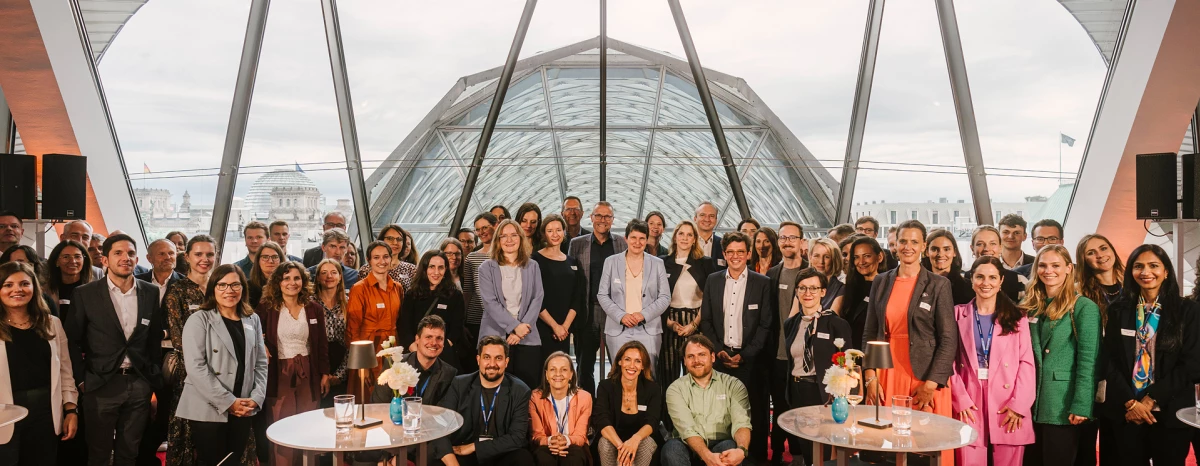
As a registered association, the Steering Committee – composed of the authorized representatives of the Member Companies – serves as econsense’s central management body. The Executive Board is elected from among the members of the Steering Committee. The Executive Board and the Steering Committee jointly decide on the thematic priorities and the future development of econsense. The Executive Board is also responsible for cooperating with business, politics, society, and the media.
The Board of Trustees is the representative body of econsense and is composed of executive board members from our Member Companies.
Collaboration with long-standing Partners enables econsense to specifically incorporate new perspectives and generate momentum—for example, through joint events. The econsense Team works closely with Member Companies and is responsible for the substantive implementation and continuous development of all relevant sustainability topics. As experts in their respective fields, team members serve as points of contact for business, politics, society, and the media.