At econsense, we work together to help companies systematically measure, manage, and transparently report on sustainability. This fosters a better understanding of risks and business opportunities. This information is important not only for management but also for financial markets, which play a key role in directing private capital toward sustainable activities.
Finance & Reporting

Sustainability data as a strategic management and financing factor
The transition to more sustainable business practices requires companies to systematically understand and quantify the impact of their operations on the climate, the environment, and human rights. At the same time, their success depends significantly on whether capital is directed toward sustainable activities. Meaningful, reliable, and comparable sustainability information therefore forms a key foundation for better understanding risks and opportunities and enabling well-informed business and financial decisions.
In the past few years, a dynamic regulatory environment has emerged around sustainable finance. Initiatives such as the EU Taxonomy Regulation, the Sustainable Finance Disclosure Regulation (SFDR), and particularly the Corporate Sustainability Reporting Directive (CSRD) have established extensive reporting and disclosure requirements for companies in the real and financial sectors. This has necessitated the development of comprehensive data and reporting systems within companies.
Many companies have now realized the strategic value of the data they collect. High-quality sustainability data not only enables companies to meet regulatory requirements but also helps them better identify and manage risks along the value chain, increase transparency for stakeholders, and identify new business and investment opportunities. Sustainability reporting is thus increasingly becoming a valuable tool for corporate governance and strategic decision-making.
Current topics & offerings in the cluster
Through its Finance & Reporting cluster, econsense supports its member companies in actively shaping these developments. We assist with the analysis of complex regulatory requirements, facilitate the exchange of experiences among members, and connect companies with experts from the business, political, academic, and consulting sectors. A particular focus is placed on practical implementation issues, such as the application of the EU taxonomy, the implementation of European reporting standards (ESRS), or the establishment of reliable data and governance structures.
In addition to the cluster meetings, current offerings include a series of workshops on climate transition plans, the Investor Relations Roundtable, discussion forums on CSRD and ESRS developments—including issues related to data quality and data management—global reporting trends, such as those surrounding the ISSB, as well as discussions on the new ESG Ratings Regulation.
Your contact at econsense

Vera Hasselwander
Project Manager

Fatbardh Kqiku
Project Manager
Related content

ecolution26-Recap zur Breakout Session „Transition Finance“
23.06.2026
Zwischen Investitionsbedarf und Unsicherheit gibt es nicht die eine "richtige" Entscheidung: In der …

2. Ausgabe unseres Deep Dive Workshops zu Climate Transition Plans
16.07.2026
Beim zweiten Deep Dive der econsense-CTP-Reihe bei der Daimler Truck AG in Stuttgart vertieften die …
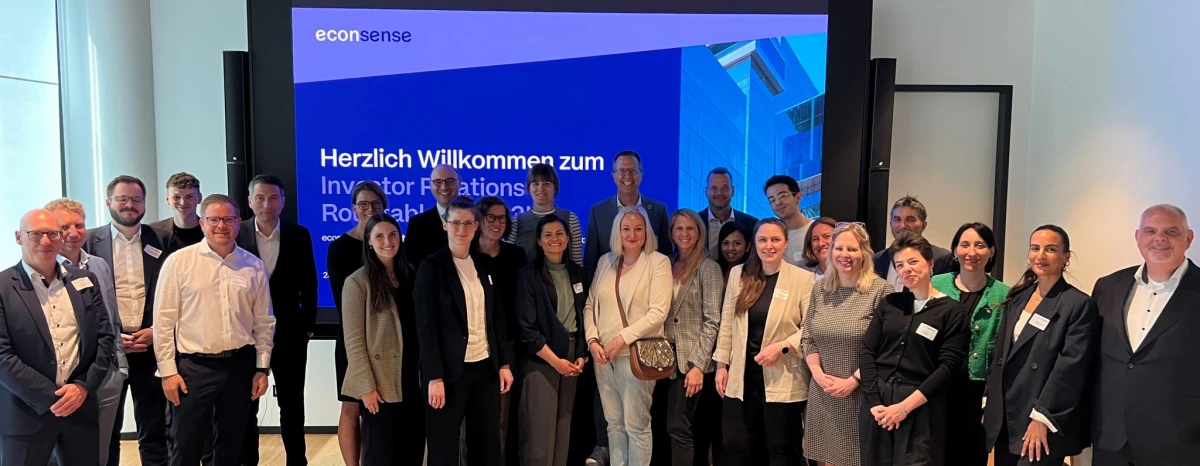
Recap on the third Investor Relations Roundtable
30.04.2026
At our third Investor Relations Roundtable at Deloitte in Frankfurt, the discussion focused on how …
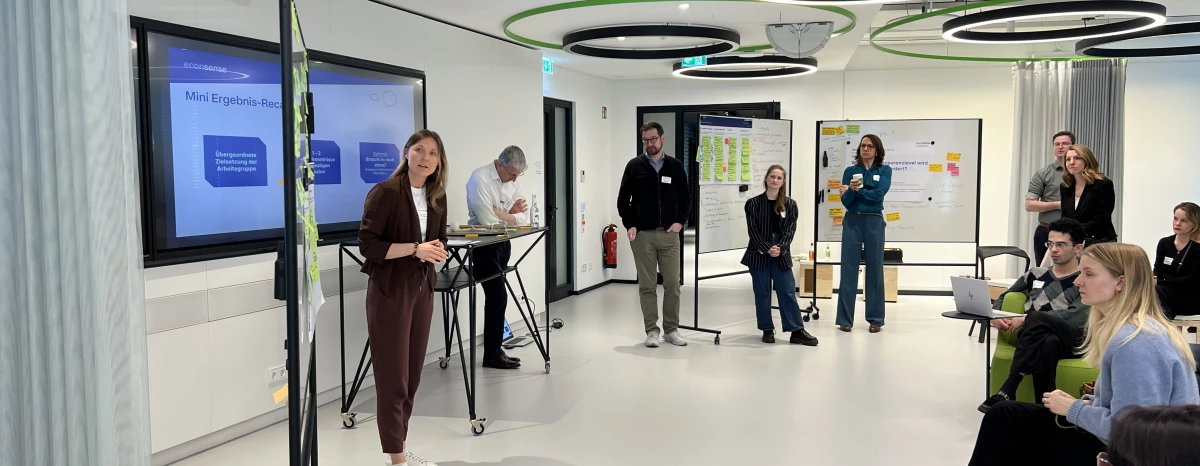
Deep-Dive into Climate Transition Plans
10.03.2026
Complex challenges are rarely solved alone: At the deep-dive workshop in our series on climate …

econsense at Green Finance Forum of dfv Euro Finance Group
27.11.2025
dfv Euro Finance Group GmbH and its Green Finance Forum in Frankfurt are always worth a visit. It’s …
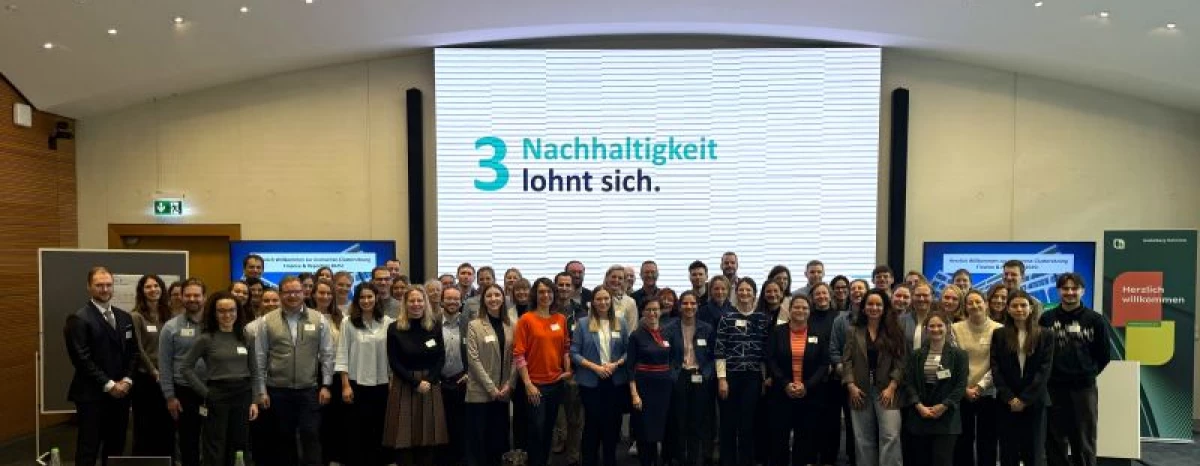
The Fall Meeting of the Finance & Reporting Cluster
18.11.2025
It was a full house at the Finance & Reporting Cluster’s econsense fall meeting! Over 60 …