Companies are taking responsibility within their own operations and throughout their value chains. At econsense, we help our members understand and implement regulatory requirements. At the same time, we are developing proactive approaches to better manage risks, strengthen standards, and further develop collaboration with suppliers and stakeholders.
Human Rights & Value Chains

Human Rights and Sustainability for future-proof supply chains
Given the increasing complexity of global value chains, a key challenge for companies is to ensure transparency throughout their supply chains, identify risks at an early stage, and address them effectively. This is based on internationally recognized frameworks such as the UN Guiding Principles on Business and Human Rights (UNGPs) and the OECD Guidelines for Multinational Enterprises, which define expectations for responsible business conduct. At the same time, the regulatory framework in Germany (LkSG) and Europe (CSDDD) has evolved dynamically in recent years.
At the same time, sector- and product-specific regulations are increasingly being developed to address specific aspects of sustainable value creation. Regulations such as the EU regulations on batteries and deforestation-free supply chains serve as examples of how sustainability requirements are increasingly being translated into concrete product and market access rules, thereby directly influencing global supply chain structures.
econsense monitors the evolution of the regulatory framework and helps its members understand and strategically implement both mandatory requirements and voluntary standards.
Strategic supply chain management is far more than mere compliance: it strengthens risk management, enables strategic raw material procurement, and thereby increases resilience. Companies that proactively shape this transformation early on cannot only better meet regulatory requirements but also tap into innovation potential, deepen partnerships along their supply chains, and secure long-term competitive advantages.
Current topics and offerings in the cluster
In the Human Rights & Value Chains cluster, we offer our member companies a space to exchange experiences and engage in dialogue with one another as well as with external stakeholders and experts. Together, we work on practical solutions — such as improving traceability in global supply chains, and enhancing the effectiveness and measurability of activities. In addition to the cluster meetings, we offer formats such as a roundtable for human rights officers, as well as joint events with partners from the business community and civil society.
As an institutional stakeholder, econsense is a member of the National Stakeholder Forum on Business and Human Rights, which advises the German government, and serves on the advisory board of the Federal Office for Economic Affairs and Export Control (BAFA), the supervisory authority responsible for implementing the LkSG.
Your contact at econsense

Marja-Liisa Petersen
Project Manager
Related content
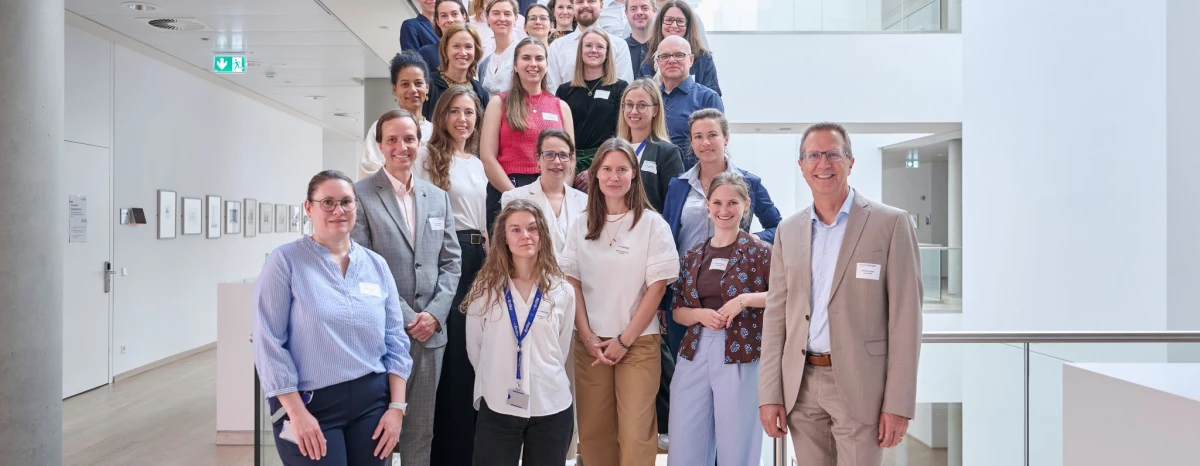
Recap zur econsense Clustersitzung Menschenrechte & Wertschöpung bei EnBW
02.10.2026
Die Themen, mit denen sich Unternehmen entlang ihrer Lieferketten auseinandersetzen, sind nicht …

ecolution26-Recap zur Breakout Session „Künstliche Intelligenz“
25.06.2026
Effizienz und Verantwortung dürfen bei der KI-Nutzung kein Widerspruch sein: KI ist längst in der …

Photos, quotes and the video from ecolution 2026
18.06.2026
Under the title “innovate – empower – connect: Translating Responsibility into Growth,” we …
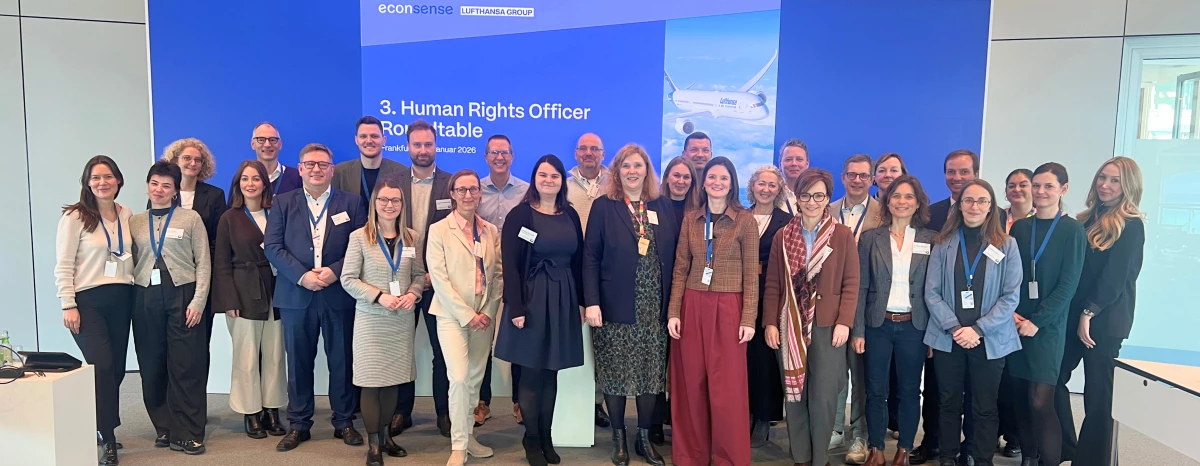
Recap on the Human Rights Officer Roundtable
28.01.2026
At econsense we used the start of 2026 to join forces with the Lufthansa Group for the 3rd …
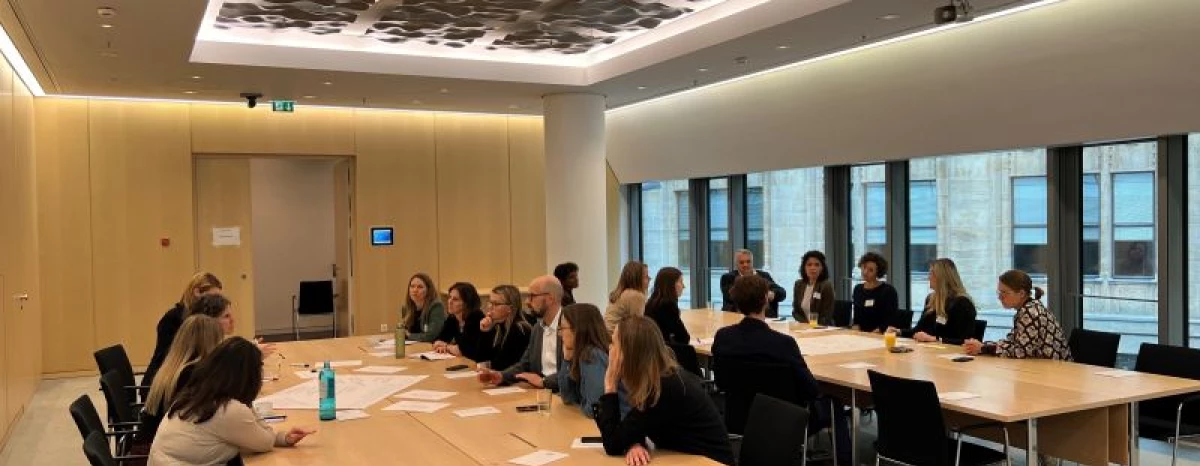
The Fall Meeting of the Human Rights & Value Creation Cluster
20.10.2025
On October 17, the fall meeting of the econsense Human Rights & Value Creation Cluster took …

"Investing in People" 1. Recap of the workshop series on the anniversary
11.06.2025
"Investing in People" – Part 1 of the recap of our workshop series on econsense's anniversary. …